China Top Solar Energy Solutions to Harness Solar Power Effectively?
China has emerged as a global leader in Solar Energy Solar solutions, leveraging its vast resources and innovation. According to the International Renewable Energy Agency, China's solar capacity reached over 250 gigawatts in 2022. This impressive figure highlights the country's commitment to harnessing solar power effectively.
While advancements are evident, challenges persist. Energy storage and grid integration remain critical issues. According to a report by the National Renewable Energy Laboratory, more than 30% of solar energy potential is still untapped due to these barriers. The ongoing quest for efficiency emphasizes the need for improved technologies and infrastructure.
Moreover, public awareness and acceptance of solar energy have room for improvement. As reported by the Pew Research Center, only 47% of Chinese citizens are fully aware of solar benefits. This gap suggests a need for enhanced education and outreach. Addressing these complexities can unlock further potential in China's solar energy sector.
Overview of Solar Energy Potential in China
China is endowed with substantial solar energy potential. Its vast land area and high solar irradiance create optimal conditions for solar power generation. Analysts estimate that solar energy could meet a significant portion of China's energy needs in the coming years. The growth of the solar sector has led to increased job opportunities and technological innovation.
However, many challenges remain. The integration of solar power into the existing grid is complex. Energy storage systems are still developing. Some regions experience overcapacity during peak sun hours, while others struggle with deficits. Policies and incentives must evolve to address these disparities effectively.
Moreover, environmental concerns arise regarding the production and disposal of solar panels. Recycling processes are not yet widely adopted. While the future of solar energy in China looks promising, addressing these issues is essential for sustainable growth. Balancing rapid expansion with environmental responsibility presents a significant challenge for policymakers and industry leaders.
China's Solar Energy Potential
This bar chart illustrates the installed solar power capacity in gigawatts (GW) across various provinces in China as of 2023. The chart highlights the regions leading in solar energy harnessing, showcasing China's commitment to expanding its renewable energy infrastructure.
Current Solar Energy Technologies Used in China
China is at the forefront of solar energy adoption. As of 2022, the country installed over 30 gigawatts (GW) of solar capacity, bringing its total to nearly 400 GW. Various technologies are driving this growth, including photovoltaic (PV) systems and solar thermal solutions. China accounts for more than 50% of global PV production. However, challenges persist, including energy storage and efficiency issues.
Current solar technologies vary widely. Photovoltaic systems dominate the landscape, using silicon-based cells. These systems convert sunlight directly into electricity. Solar thermal systems, meanwhile, harness heat from the sun to generate power. A report from the International Energy Agency (IEA) indicates that solar thermal systems could increase efficiency by 20% if better integrated with other renewable solutions. Innovations, such as bifacial panels and floating solar farms, show promise but require further development.
Research has identified that while solar penetration is growing, grid infrastructure lags behind. Several areas still experience limits on solar energy absorption. Maintaining balance in energy supply remains a challenge, especially during peak production times. Continuous evaluation and adaptation of technologies will be crucial for future advancements in this sector.
Innovative Practices for Solar Energy Efficiency
Harnessing solar power effectively requires innovative practices to improve energy efficiency. A significant aspect of solar energy efficiency is the alignment of solar panels with sunlight. By adjusting the angle of the panels according to the sun’s position, you can increase energy capture. This simple tweak can lead to higher energy output and lower costs in the long run.
Consider incorporating energy storage systems. These systems allow surplus energy to be saved for later use. During cloudy days or at night, stored energy can provide continuous power. This flexibility enhances the viability of solar energy as a primary power source.
Tips: Regular maintenance is essential. Clean your panels often to remove dirt and dust. Dust accumulation can block sunlight, reducing efficiency. Also, monitor energy output regularly. This helps detect problems before they escalate. Engage with local energy experts for tailored solutions. Their guidance can streamline your solar energy journey. The effectiveness of these innovations can vary based on location and weather patterns. Always reflect on your energy usage to identify potential improvements.
Policies and Incentives Supporting Solar Energy Adoption
China's commitment to solar energy is evident in its robust policies and incentives. The government introduced feed-in tariffs that encourage investments in solar power systems. These tariffs guarantee a fixed payment for electricity generated from solar panels. Additionally, tax incentives for both companies and individuals stimulate the market. This support reduces initial costs for solar installation.
Local authorities often provide subsidies to residents who install solar panels. These initiatives not only cut expenses but also promote community engagement in renewable energy practices. However, there are challenges to address. Many potential users remain unaware of these incentives. Education and outreach programs are essential to increase participation. Moreover, bureaucracy can delay approvals for solar projects, frustrating those eager to harness solar power.
Despite these hurdles, growing awareness and technological advancements provide hope. Improved solar technology enhances efficiency, making it easier for people to adopt it. As the landscape evolves, continuous evaluation of policies will ensure they align with changing needs. China's solar future is bright, but collaboration and communication must strengthen to achieve maximum impact.
China Top Solar Energy Solutions to Harness Solar Power Effectively
| Dimension |
Data Value |
Description |
| Solar Capacity (GW) |
250 |
Total installed solar capacity in China by 2022. |
| Annual Solar Growth (%) |
20 |
Average annual growth rate of solar installations. |
| Government Incentives (Billion CNY) |
15 |
Estimated government subsidies for solar energy projects. |
| Jobs Created |
2,500,000 |
Number of jobs created in the solar sector. |
| CO2 Emissions Reduction (Million Tons) |
100 |
Estimated reduction in CO2 emissions due to solar power. |
| R&D Investment (Billion CNY) |
5 |
Research and development budget for solar technologies. |
Challenges and Future Trends in China's Solar Energy Sector
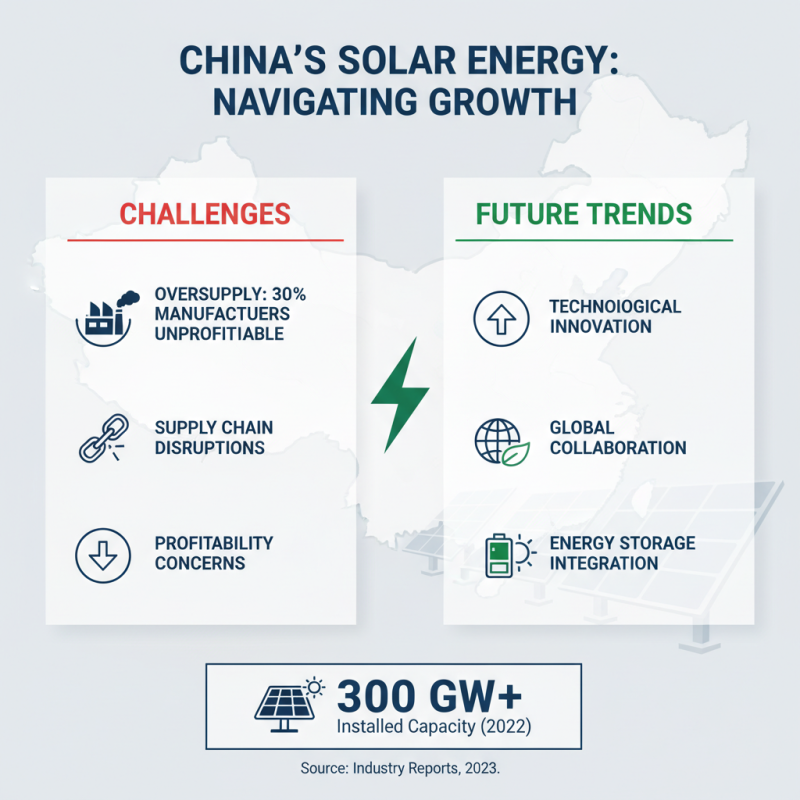
China's solar energy sector is facing significant challenges as it grows. The country is the largest global producer of solar panels, with installed capacity exceeding 300 GW as of 2022. However, the rapid expansion has led to issues such as oversupply and supply chain disruptions. Reports indicate that about 30% of solar manufacturers struggle with profitability, which raises concerns about sustainability.
Another pressing concern is the grid infrastructure's ability to accommodate increased solar input. Many regions experience grid congestion, limiting solar energy's contribution to energy generation. According to the National Energy Administration, only 75% of solar energy produced in 2022 was utilized. This inefficiency highlights the need for grid enhancements and smart technology adoption.
Future trends indicate a shift towards innovation, such as energy storage solutions. Energy storage can mitigate intermittency issues and improve energy management. The International Energy Agency predicts that by 2025, battery storage could support up to 40% of renewable energy integration. However, the costs remain high, and advancements are still necessary to make storage accessible. Balancing these challenges while driving forward will be crucial for China’s solar future.