How to Choose the Best Household Solar Generator for Your Needs?
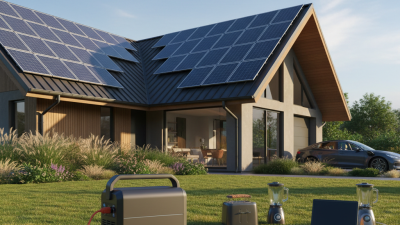
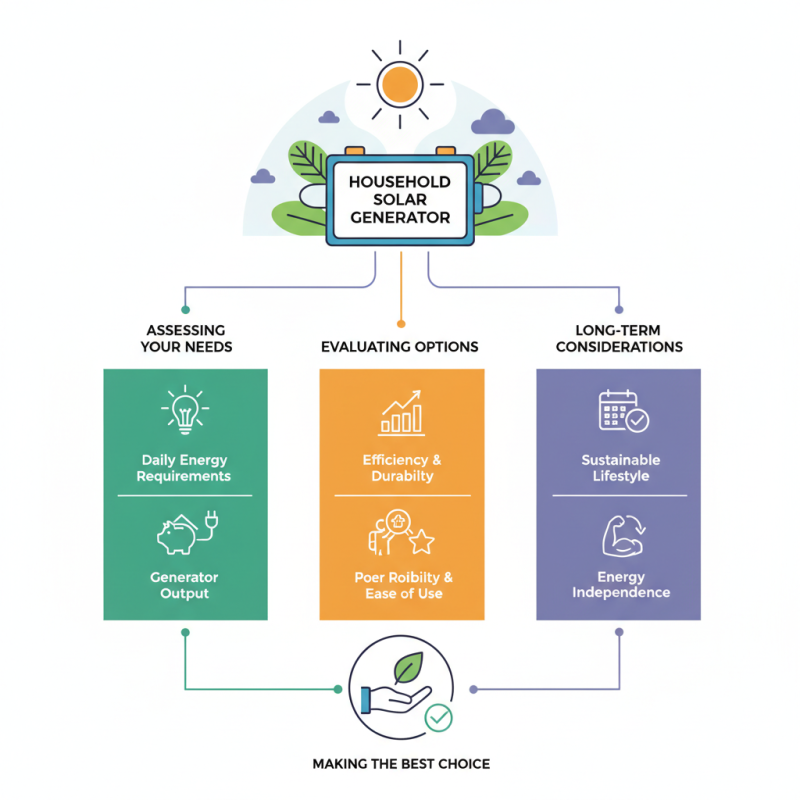
Selecting the right Household Solar Generator can be a daunting task. With numerous options available, it's essential to understand what best suits your needs. A reliable generator provides energy independence during power outages and contributes to a sustainable lifestyle.
In today's market, various models offer different capacities and features. It's crucial to consider your daily energy requirements and the generator's output. You might also think about your budget. Not all generators are created equal. Some may lack efficiency or durability.
Investing in a quality Household Solar Generator is a long-term commitment. You need a unit that not only meets your needs but performs well over time. Researching user reviews can provide valuable insights. Factors such as portability, battery life, and ease of use are significant. Reflect on your lifestyle and energy consumption habits. This reflection is key to making the best choice.
Understanding Household Solar Generators and Their Benefits
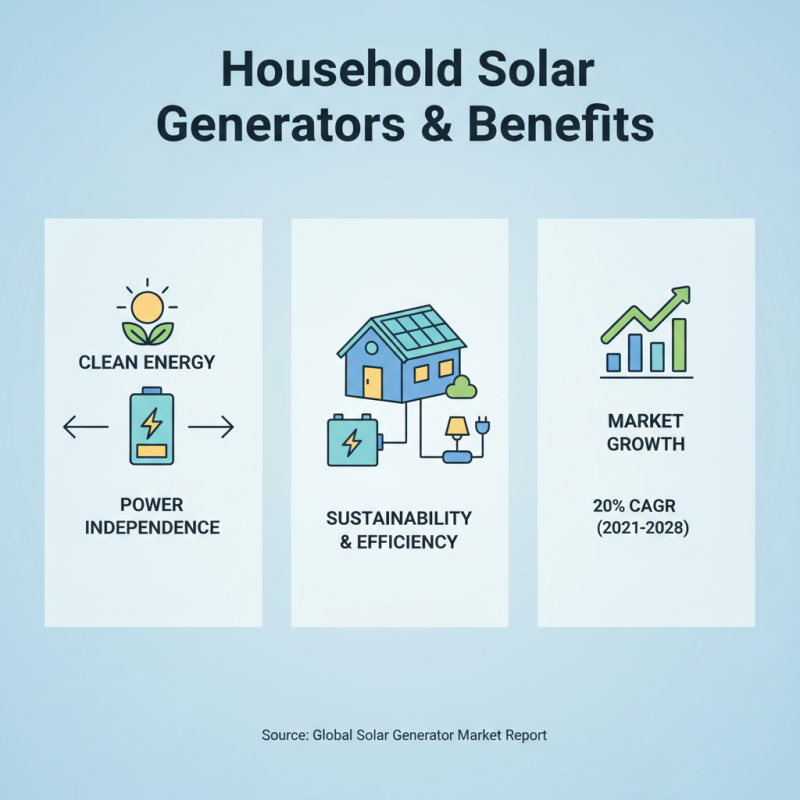
Household solar generators have become increasingly popular for their sustainability and efficiency. They tap into solar energy, providing a clean power source. Reports indicate that the global solar generator market is expected to grow at a CAGR of 20% from 2021 to 2028. This growth highlights the increasing awareness of renewable energy options.
Understanding the benefits of solar generators is crucial. They offer energy independence, reducing your reliance on conventional power grids. With nearly 30% of American households already having a preference for solar energy, it's clear that many people value both eco-friendliness and cost-effectiveness. Solar generators also emit zero emissions during operation, contributing to a healthier environment.
When selecting a solar generator, consider your energy needs. Tips include determining the wattage required for your devices. Calculate how much power you consume during peak usage times. Pay attention to battery capacity and charge cycles. Investing in quality can prevent frequent replacements. Additionally, think about portability and ease of use, especially if you plan to use it while camping or on the go.
Solar technology is continuously evolving. While some models promise extensive features, they might lack practical usability. Balance between advanced features and real-life application is essential. As you explore options, remember that efficiency ratings can vary. Look for reputable certifications to ensure reliability in your choice.
Key Factors to Consider When Choosing a Solar Generator
When selecting a household solar generator, crucial factors must be on your radar. Power capacity is a primary consideration. Look for models with sufficient wattage to meet your daily energy needs. Most households typically require generators with at least 1,000 watts for essential appliances. According to the U.S. Department of Energy, home energy consumption averages about 877 kWh per month. Calculate your needs to avoid underperformance. Remember that excess capacity often leads to higher upfront costs.
Battery life isn’t just a number; it affects your generator's performance. Lithium-ion batteries are increasingly popular due to their longevity and efficiency. They can last over 2,000 charge cycles compared to lead-acid batteries, which may only handle 500 cycles. Evaluating the lifespan and discharge rates helps in estimating long-term investment value.
Portability can also make or break your experience. If you plan to use your solar generator for camping or in various locations, weight and design are pivotal. Some models are lightweight and designed for easy transport. However, they may compromise power output. Consider your priorities carefully; ideal setups balance portability with power needs effectively. Constraints like budget and energy requirements often lead to compromises. This reflects the importance of aligning your choices with realistic expectations.
Evaluating Power Needs and Usage Scenarios
When selecting a household solar generator, understanding your power needs is crucial. Think about the essentials in your home. A refrigerator, some lights, and maybe your smartphone. Each device has a specific wattage. Calculate how many watts you need to run these appliances simultaneously. For instance, a typical fridge may require 200 to 800 watts. Write down your calculations. It helps to visualize your energy consumption better.
Next, consider how you will use the generator. Will it be for emergency backup or daily use? Emergency needs often require a quick response. For daily use, you may want a generator that can handle a larger load over time. Evaluate your lifestyle. If you frequently camp or love outdoor activities, a portable option may suit you. Reflect on what makes sense for your situation. A generator that meets your needs is not always the most powerful one.
Different users have diverse experiences. Some might prioritize weight and portability. Others might focus solely on power capacity. This variety leads to differing opinions on the "best" generator. Remember, what works for one might not work for another. As you explore options, be open to adjusting your requirements. Keep a journal of your findings and thoughts.
Comparing Different Types of Solar Generators in the Market
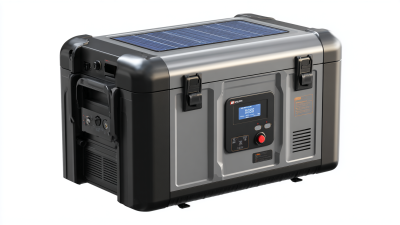
When considering a solar generator, it’s essential to understand the types available in the market. Portable solar generators are compact and ideal for camping or emergency backup. They often have varying battery capacities, typically ranging from 300 to 500 watt-hours. However, their power may not support larger appliances.
Another option is standalone solar generators, which can be installed at home. They usually come with larger solar panels and batteries. This provides more power for everyday use. Users should be cautious, as these systems can require a higher initial investment. Performance may vary based on sunlight availability and installation quality.
Hybrid solar generators combine gas and solar power. They offer flexibility, especially during extended cloudy periods. Still, ongoing fuel costs can add up. Users need to weigh the benefits and drawbacks carefully. Understanding your power needs is crucial for making an informed choice. This process might require some trial and error to perfect.
Comparison of Different Types of Household Solar Generators
Assessing Budget and Long-Term Savings with Solar Solutions
When considering a household solar generator, understanding budget and long-term savings is crucial. A recent report from the National Renewable Energy Laboratory indicates that households can save between $20,000 to $50,000 over 20 years with solar solutions. This figure varies based on energy consumption, local solar incentives, and installation costs. Evaluating your household's energy needs is essential. Calculating monthly energy use helps ensure you choose the right generator size, impacting your overall savings.
Examining upfront costs is also vital. Solar generators can range from $200 to over $2,000. While the initial investment can be steep, many households see payback within five to seven years. Additionally, some states offer tax incentives that further improve affordability. According to a Pew Research study, around 90% of solar adopters reported satisfaction due to reduced energy bills.
However, not every situation guarantees savings. Factors like system quality and maintenance need consideration. Poor decisions on equipment can lead to higher long-term costs. Investing in reliable technology is crucial. Compatibility with home systems matters. It is wise to assess both current and future energy needs to avoid regrets in your solar journey.