How to Choose the Best 10kw Solar Power System for Your Needs?
Choosing the right Solar Power System 10kw is crucial for maximizing energy efficiency and cost savings. With the increasing adoption of solar energy, understanding your specific needs is more important than ever. According to the Solar Energy Industries Association, residential solar installations grew by over 20% last year, emphasizing the growing demand for reliable systems.
Expert Mark Thompson, a leading consultant in solar technologies, notes, "The right 10kw system can significantly reduce your electricity bill while enhancing energy independence." This highlights the potential benefits of investing in a suitable solar solution. However, selecting the best system requires careful consideration of various factors, including local weather conditions, energy consumption, and budget constraints.
Many users report difficulties in determining their exact needs. The process can be overwhelming. It's vital to research components and warranties thoroughly. Understanding the differences between various brands and technologies can lead to better decisions. The right Solar Power System 10kw should align closely with both your energy use and lifestyle, ensuring long-term satisfaction.
Understanding Your Energy Needs for a 10kw Solar Power System
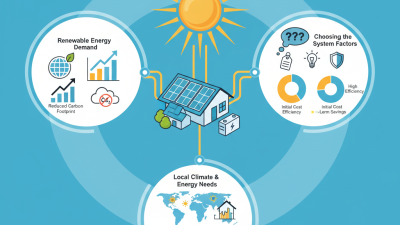
Choosing the right 10kw solar power system starts with understanding your energy needs. Estimate your daily energy consumption. This information is crucial. For instance, if you use about 30 kilowatt-hours (kWh) per day, a 10kw system will typically cover this. It's important to analyze your monthly bills. Look for patterns in your usage. Some months may spike due to seasonal changes.
Consider factors like the number of household members and types of appliances. High energy-consuming devices, such as air conditioners or electric heaters, will increase your needs. Think about your future energy consumption too. Will you add electric vehicles or more appliances? Anticipating these needs is crucial.
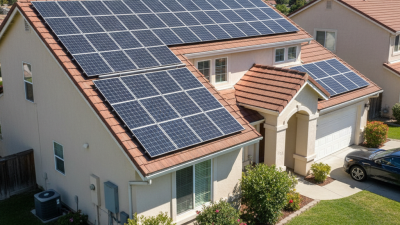
Finally, assess your roof space and sunlight exposure. Not every roof is ideal for solar panels. Shadows from trees or buildings can impact efficiency. After collecting this information, you'll be better equipped to choose the right system. But don't forget to consult with a professional for tailored advice. Their insights can be invaluable. They can help identify potential issues you might overlook.
Understanding Energy Needs for a 10kw Solar Power System
Evaluating Different Types of Solar Panels for Efficiency and Cost
When considering a 10kw solar power system, evaluating different types of solar panels is essential. There are mainly three types: monocrystalline, polycrystalline, and thin-film. Each type has distinct efficiency levels and cost implications. For instance, according to the National Renewable Energy Laboratory, monocrystalline panels boast an efficiency rate of up to 22%, making them a top choice for limited space. However, their higher price might not suit every homeowner's budget.
Polycrystalline panels offer a middle ground, with efficiencies around 15-20%. They are typically cheaper than monocrystalline panels. However, they require more installation space over time. A report by Solar Energy Industries Association reminds us that while these panels are cost-effective, their production process generates more waste, raising environmental concerns.
Thin-film solar panels are versatile and lightweight, but they generally have the lowest efficiency rates, often below 15%. This could mean occupying more roof space for the same energy output. Homeowners should reflect on their specific needs. Lower upfront costs may be attractive, yet efficiency can lead to long-term savings. Balancing these factors involves critical thinking about both immediate and future energy needs.
Assessing Inverter Options: Choosing the Right Type for Your System
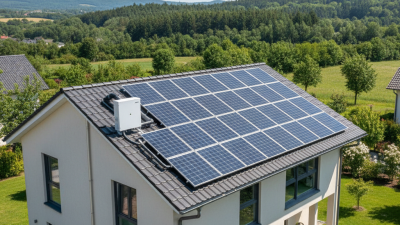
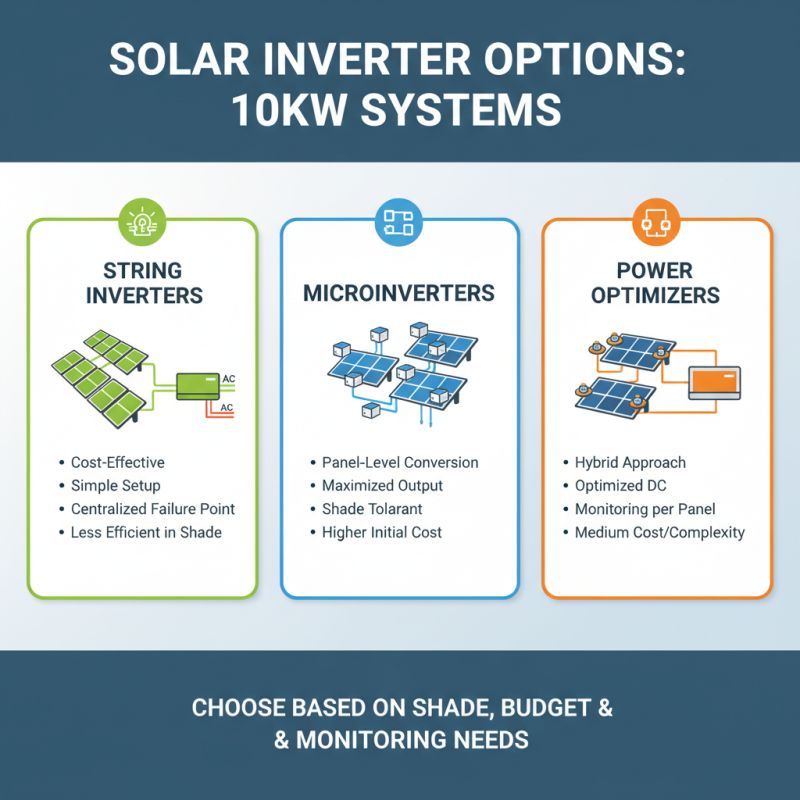
Choosing the right inverter is crucial when selecting a 10kw solar power system. Inverters convert the direct current (DC) produced by solar panels into alternating current (AC). Understanding the types is essential. There are string inverters, microinverters, and power optimizers. Each type has distinct advantages and drawbacks.
String inverters are the most common. They are cost-effective and easier to install. However, they can be less efficient if panels are shaded or dirty. On the other hand, microinverters can maximize energy production. They work individually on each panel, which is beneficial in uneven light conditions. But they tend to be pricier.
Power optimizers are a middle ground. They enhance the performance of string inverters by managing the output of each panel. This option might not suit everyone, though. Each system has its own installation complexities and maintenance needs. It's vital to evaluate the specific environment of your solar installation before making a decision. This can be a learning process, as personal experience often guides the best choice.
Examining Installation Requirements and Space Considerations
When considering a 10kw solar power system, installation requirements play a crucial role. First, the orientation and tilt of your roof can significantly impact solar efficiency. Solar panels typically perform best when installed on south-facing roofs with a tilt of 30 to 40 degrees. According to the National Renewable Energy Laboratory, this can increase energy production by up to 25%.
Space considerations are equally important. A 10kw system requires approximately 600 to 800 square feet of roof space. However, not all roofs can accommodate this. Factors like shading from trees or nearby buildings can reduce output. An installation may need adjustments if space is limited or inappropriate slopes exist.
Moreover, local regulations and permits can complicate the installation process. Some areas have strict zoning laws that govern solar installations. Homeowners should also consider their energy consumption needs. A system too large could result in unnecessary expenses. Conversely, a system too small may not meet energy demands, leading to reliance on traditional power sources. Planning meticulously can help balance these elements, ensuring both efficiency and cost-effectiveness.
How to Choose the Best 10kw Solar Power System for Your Needs?
| Feature |
Details |
| System Size |
10 kW |
| Average Output |
30-40 kWh per day |
| Space Required |
Approximately 400 to 600 square feet |
| Installation Angle |
15° to 40° for optimal performance |
| Inverter Type |
String or Microinverter |
| Battery Storage |
Optional, enhances energy independence |
| Estimated Cost |
$15,000 - $25,000 including installation |
| Warranty |
Typically 25 years for panels |
| Financing Options |
Cash purchase, loans, leases, and PPA |
Comparing Costs and Incentives for a 10kw Solar Power System
When considering a 10kW solar power system, understanding costs and incentives is crucial. Generally, the average cost of a 10kW system ranges between $15,000 to $30,000. Factors like installation, location, and equipment quality play a significant role in determining the final price. Also, these figures can vary based on local solar incentives and rebates.
Incentives often provide substantial savings. Many states offer tax credits or rebates for solar installations. These can reduce upfront costs. Additionally, some regions may have net metering policies that allow users to sell excess energy back to the grid. However, not all incentives are easy to track. It can be challenging to find current offerings.
While many homeowners are enthusiastic about solar power, they should also be cautious. It’s essential to research thoroughly. Costs can add up with hidden fees or unexpected maintenance. Seek guidance from energy experts. This can help clarify what works best for your unique situation. Knowledge is power when navigating this complex landscape.