MH Energy       Your Better Solar and Energy Partner

Leave Your Message

10 Essential Tips for Choosing Solar Battery Storage Solutions

When considering Solar Battery Storage, it's essential to make informed choices. Industry expert Sarah Mitchell, a leading renewable energy consultant, emphasizes, "The right battery can transform your energy consumption." This underscores the importance of selecting the perfect storage solution for your solar energy needs.

Solar Battery Storage systems can significantly enhance energy efficiency. They enable users to store excess power generated during the day. This power can be used later, particularly during high-demand periods. However, choosing the right system is not always straightforward. Many factors influence the decision, including capacity, lifespan, and installation costs.

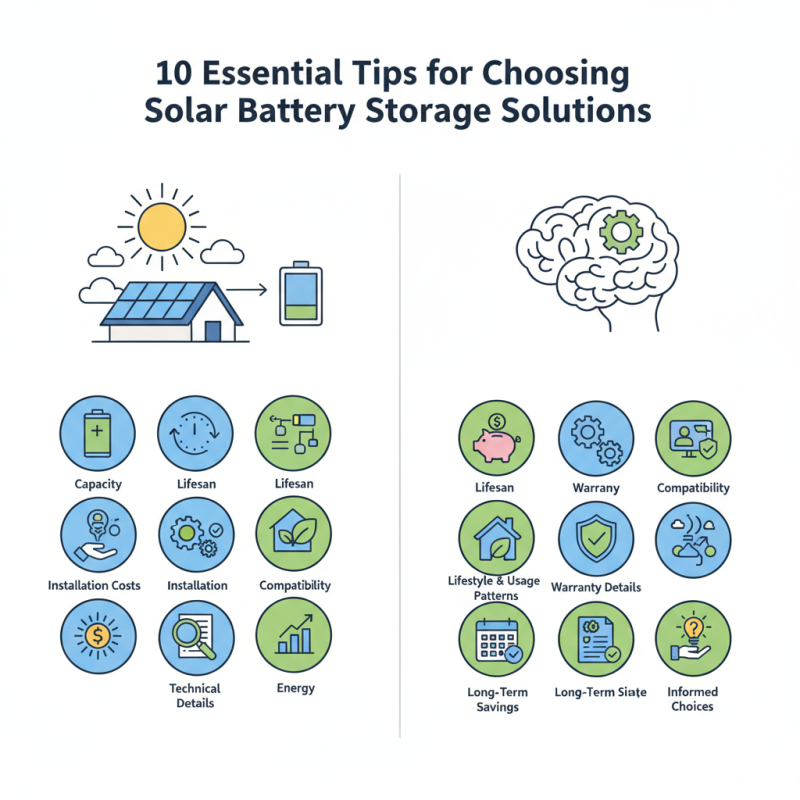
Many homeowners face the challenge of understanding the technical details. Common mistakes include overlooking warranty details or compatibility with existing systems. A comprehensive evaluation is necessary. Not every solution suits your lifestyle or usage patterns. Being diligent can lead to a more efficient solar setup and long-term savings.
10 Essential Tips for Choosing Solar Battery Storage Solutions

Understanding Solar Battery Storage Basics: Key Terminology and Concepts

Choosing the right solar battery storage solution involves understanding key terminology and concepts. Solar batteries are essential for maximizing energy from your solar panels. Understanding the difference between deep cycle and lead-acid batteries is crucial. Deep cycle batteries can discharge up to 80%, storing more energy for use during non-sunny hours.

Another important term is capacity, usually measured in kilowatt-hours (kWh). This capacity indicates how much energy a battery can store. A higher capacity means more energy for your home. However, larger capacities can be more expensive. It's vital to assess your energy needs realistically. Beware of overestimating your storage requirements, as this may lead to unnecessary costs.

Efficiency is another key factor. It reflects the amount of stored energy you can use. Generally, lithium-ion batteries are more efficient than traditional options. However, this doesn’t always mean they’re the best choice depending on your unique situation. Reflect on your long-term energy goals instead. Consider how often you will use the stored energy and during what times. Each consideration helps in making an informed decision.

10 Essential Tips for Choosing Solar Battery Storage Solutions

Tip Description Key Terminology Considerations
1. Assess Your Energy Needs Understand your daily energy consumption to determine the battery size you need. kWh (kilowatt-hour) Consider peak usage times.
2. Understand Battery Types Familiarize yourself with lead-acid, lithium-ion, and flow batteries. Lithium-ion, Lead-acid Evaluate lifespan and cost.
3. Check the Depth of Discharge Ensure the battery allows for sufficient depth of discharge for your needs. DoD (Depth of Discharge) Higher DoD means more usable energy.
4. Evaluate Efficiency Ratings Look for batteries with high round-trip efficiency for better performance. Round-trip efficiency Higher percentages indicate less energy loss.
5. Consider Cycle Life Select a battery with a high cycle life for longevity and cost-effectiveness. Cycle life Check battery warranty for assurance.
6. Look for Safety Features Ensure the battery comes with safety certifications and built-in protection. Safety certifications Evaluate risk of thermal runaway.
7. Ensure Compatibility Check compatibility with your solar panel system and inverter. Inverter compatibility Avoid system mismatches.
8. Analyze Warranty Terms Review the manufacturer's warranty for peace of mind. Warranty period Understand coverage limits.
9. Assess Installation Costs Include installation costs in your budget for the overall investment. Installation fees Get multiple quotes.
10. Research Customer Reviews Read customer feedback to gauge satisfaction and performance. Customer satisfaction Look for trends in reviews.

Evaluating Energy Needs: How to Determine Your Home's Battery Requirements

10 Essential Tips for Choosing Solar Battery Storage Solutions

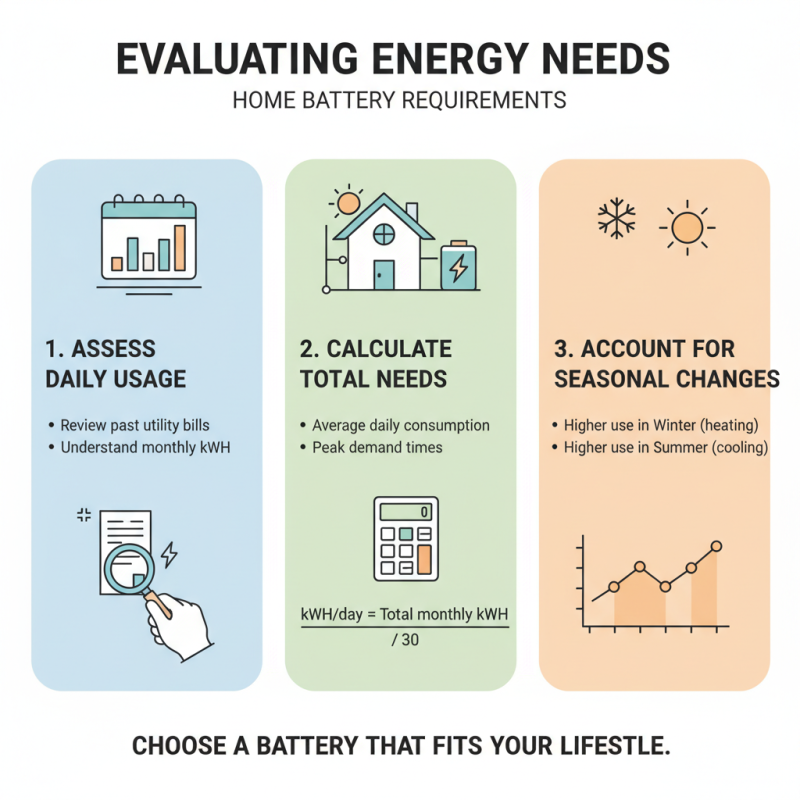
Evaluating your home’s energy needs is crucial when selecting solar battery storage. Start by assessing your daily energy consumption. Review past utility bills to understand how much energy you use each month. This will guide you in choosing a battery that meets your requirements. Don’t overlook seasonal changes. Energy usage may rise in winter or summer months due to heating or cooling needs.

It's also essential to factor in critical appliances. Identify which devices you want to run during a power outage. This could include refrigerators, lights, or medical equipment. Calculate their combined wattage to ensure your battery can handle the load. Remember that not all batteries provide the same capacity. Some may not sufficiently power all your essentials. Reflect on your lifestyle. Do you work from home or rely heavily on technology? Your choices will directly impact your battery needs.

Lastly, consider future energy goals. Are you planning to add more solar panels or increase energy-consuming devices? Keeping these potential changes in mind will help you select a battery that remains efficient over time. It’s okay to feel uncertain; energy needs can evolve. Take your time in making the right choice to avoid future regrets.

Comparing Battery Technologies: Lithium-ion vs. Lead-acid for Solar Storage

When considering solar battery storage options, the choice between lithium-ion and lead-acid batteries stands out. Lithium-ion batteries are compact and lightweight. They are known for their high energy density and longer lifespan. This technology supports faster charging and discharging cycles, making it more efficient. A well-calibrated solar system can vastly enhance the benefits of lithium-ion storage. Their cost is higher, but the long-term savings can balance this out.

On the other hand, lead-acid batteries are a more traditional choice. They are heavier and bulkier, but they come at a lower initial cost. Their reliability has been proven over decades. However, they require maintenance, and their lifespan is notably shorter than lithium-ion batteries. Consider the energy needs carefully. Reflect on how often you plan to use stored energy. This choice is not just economic; it also reflects your lifestyle and energy philosophy. Think about environmental impacts as well. This decision might shape your renewable energy journey for years to come.

Assessing System Compatibility: Ensuring Your Battery Works with Existing Setup

When considering solar battery storage solutions, compatibility with your existing system is crucial. Many homeowners underestimate this factor. According to a report by the U.S. Department of Energy, nearly 30% of solar installations fail due to compatibility issues between batteries and inverters. Checking the specifications of your system is essential for optimal performance.


It’s important to assess electrical requirements. Some batteries may have voltage and current ratings that do not align with your solar panels. For instance, utilizing a battery with a higher voltage rating than your inverter can cause inefficiencies. This mismatch affects the overall energy output. System compatibility goes beyond simple voltage checks. You need to ensure the battery chemistry works harmoniously with your specific solar setup.


Moreover, consider monitoring systems. Data from Bloomberg New Energy Finance reveals that 62% of users benefit from real-time performance tracking. This feedback aids in troubleshooting potential mismatches. If you notice a decline in efficiency, it may signal a compatibility issue. When evaluating battery options, information is your best tool. It helps you navigate the complex landscape of solar storage solutions while safeguarding your investment.

Analyzing Costs and Incentives: Financial Considerations for Solar Battery Investment

When considering solar battery storage, financial aspects play a crucial role. It's essential to analyze the costs associated with installation and maintenance. The initial investment can be significant, but it's not just about upfront costs. Look at the long-term savings on energy bills. Calculate how much you can potentially save over the lifespan of the battery.

Incentives can dramatically change the financial landscape. Government rebates and tax credits may reduce your expenses significantly. However, these incentives often come with terms and conditions. It's vital to understand these requirements before making a commitment. Missing out on an opportunity could lead to higher costs later on.

Proper research is key. Some homeowners overlook financing options that could ease the burden. Explore various payment plans or loans. It's important to consider your budget and the payback period. Balancing immediate costs with future benefits can be tricky. Engaging with financial advisors or renewable energy experts often helps clarify these elements. Don’t rush; taking time can lead to better decisions.