Top China Grid Tied Solar Power System Manufacturers
China has become a central force in the global solar supply chain. Its manufacturers now serve utility, commercial, and residential projects across many electricity markets. For buyers, the challenge is not simply finding low prices. It is choosing equipment that performs reliably beside a live grid.
IRENA’s Renewable Capacity Statistics 2025 reported 451.9 gigawatts of new solar capacity worldwide in 2024. China contributed a remarkable share of that expansion. The IEA’s Renewables 2024 report also identifies solar photovoltaic power as the fastest-growing renewable technology. These figures explain the rising interest in the Grid Tied Solar Power System. Such systems connect directly with public networks, use inverters to synchronize electricity, and can reduce daytime demand from the grid. The details matter. A rooftop may face shade at 10 a.m., while a factory roof may endure heat, dust, and vibration.
“Solar PV is now the cheapest source of new electricity generation in most markets,” said Fatih Birol, Executive Director of the International Energy Agency. His observation is powerful, but price alone cannot define a dependable supplier. Product certification, inverter efficiency, warranty support, monitoring software, and long-term bankability deserve equal attention.
This guide examines leading Chinese manufacturers through those practical standards. It considers production scale, technology, export experience, and after-sales capability. Some rankings remain debatable. Data changes quickly. A manufacturer that looks impressive today may still need closer technical verification tomorrow. That caution is useful when selecting a Grid Tied Solar Power System for a real roof, real budget, and real grid connection.
Grid-Tied Solar Power Systems: Definition and Core Components
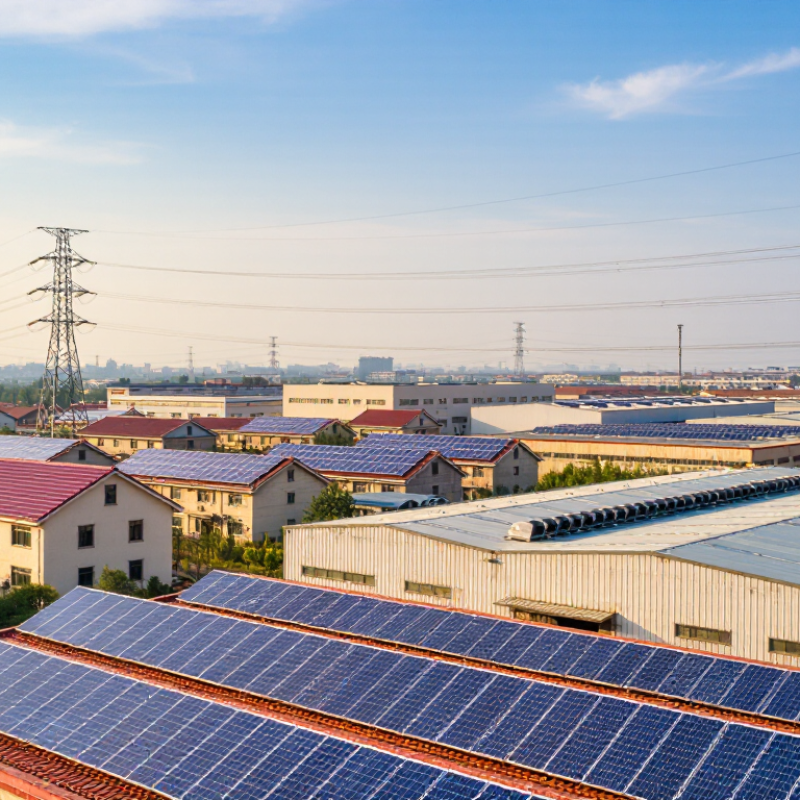
A grid-tied solar power system connects photovoltaic panels directly to a utility network. It generates electricity for household or commercial loads. Surplus power can flow back through a bidirectional meter. The grid supplies energy when solar production falls. Battery storage is optional, not essential.
Core components include PV modules, mounting structures, DC cables, protection devices, and a grid-tied inverter. The inverter converts variable direct current into synchronized alternating current. It also manages voltage, frequency, and anti-islanding protection.
The International Energy Agency’s Renewables 2024 report estimates nearly 420 GW of solar PV capacity was added globally in 2023. This rapid growth increases demand for reliable testing and careful system design.
However, a larger panel count does not guarantee better performance. Roof orientation, shading, cable losses, and local grid rules can change the result.
Tips: Check inverter efficiency, protection functions, certification, and monitoring access. Ask manufacturers for measured test data, not only laboratory claims. The IEC 61727 standard is useful for grid-interface requirements. In practical projects, installers should verify roof loading and voltage limits before ordering equipment. A neat diagram can still hide poor cable routing. That detail deserves more attention.
China’s Role in Grid-Tied Solar Manufacturing
Top China Grid Tied Solar Power System Manufacturers
China’s Role in Grid-Tied Solar Manufacturing
China has become a major center for grid-tied solar manufacturing. Its strength comes from dense supply chains, skilled engineers, and large production capacity. Factories can source cells, inverters, mounting parts, and monitoring equipment within efficient industrial networks. This proximity often shortens delivery times and supports consistent system design.
In practice, reliable manufacturing requires more than high output. Engineers must verify inverter protection, voltage matching, grounding, and anti-islanding performance. Independent testing and documented quality controls also matter. Buyers should review certifications, factory inspection records, warranty terms, and replacement procedures. A low quotation is not always a saving. It may reflect weaker components or limited technical support. Scale can hide problems, too.
Tips: Request sample test reports and production photos. Check whether the supplier understands your local grid code. Ask for clear service contacts and spare-part plans. Compare complete system costs, not only panel prices. Small details matter.
China’s manufacturing role continues to evolve through automation, energy-storage integration, and smarter monitoring platforms. However, quality can vary between factories. Careful evaluation remains essential. Even experienced buyers may overlook communication gaps or unclear responsibilities. That deserves reflection before signing a contract.
Leading Chinese Manufacturers and Their Product Portfolios
China’s grid-tied solar sector includes manufacturers serving residential, commercial, and utility-scale projects. Their portfolios often begin with monocrystalline modules in several power classes. Bifacial modules are also common for reflective ground and rooftop installations. Some factories produce string inverters, smart meters, monitoring gateways, and mounting structures. This broader supply range can simplify procurement and system matching.
For a 100 kW rooftop project, buyers may compare 550 W modules, three-phase inverters, aluminum rails, and rapid shutdown equipment. Product data should show efficiency, temperature coefficients, load ratings, and tested operating limits. Reliable manufacturers publish factory certifications, performance warranties, installation manuals, and traceable serial numbers. Independent laboratory reports deserve more weight than polished sales brochures. Warranty response time matters too.
No portfolio is perfect. A manufacturer may offer excellent modules but limited after-sales support in distant markets. Another may provide strong inverter integration while lacking customized mounting options. Buyers should review production records, quality-control procedures, spare-parts policies, and local service capacity. Factory audits can reveal packaging damage risks, inconsistent labeling, or weak documentation. Price remains important, but the cheapest package may create higher engineering and maintenance costs. A careful comparison should examine the complete system, not only the module nameplate.
How to Evaluate Chinese Grid-Tied Solar System Suppliers
Top China Grid Tied Solar Power System Manufacturers
China remains a major source of grid-tied solar equipment. IRENA reported 345.5 GW of global solar capacity additions in 2023. This scale creates choice, but also confusion. A low quotation does not prove dependable engineering or service.
Evaluate suppliers through verifiable evidence. Request factory audit records, product traceability, and recent IEC test reports. Check whether inverters support your local grid code, voltage range, frequency, and anti-islanding requirements. The IEA PVPS Trends 2024 report highlights rapid global PV expansion, making certification and system compatibility increasingly important. Ask for documented field projects with similar climate and grid conditions.
Study warranty wording carefully. Confirm who pays for transport, replacement labor, and diagnosis. Review financial stability, spare-parts locations, response times, and installer training. Independent inspection before shipment can verify insulation, cable labeling, enclosure quality, and sample performance. Do not rely on polished videos. I have found that simple records often reveal more than impressive presentations. My checklist is not perfect; small suppliers may lack formal reports yet deliver capable systems. Still, undocumented claims deserve caution. IRENA data also shows how quickly the market changes, so verify every certificate, production date, and technical promise before signing.
Certification, Quality Control, and Export Considerations
Top China Grid-Tied Solar Power System Manufacturers
Certification separates a capable manufacturer from a risky supplier. For grid-tied systems, buyers should verify IEC 61215 and IEC 61730 testing for modules. Inverters also need relevant safety, EMC, and grid-connection approvals. Requirements vary by destination. A certificate issued for one market may not satisfy another grid operator.
IEA PVPS reported global photovoltaic capacity exceeded 1.4 terawatts in 2023. This scale increases pressure on traceability, testing, and after-sales support. During factory audits, request serial-number tracking, calibrated test equipment, and records for electroluminescence testing. Check temperature cycling, insulation resistance, and power-output tolerances. Small details matter. A missing calibration record can weaken confidence.
Export quality depends on more than product certificates. Confirm the destination country’s grid code, connector rules, labeling language, customs documents, and packaging requirements. NREL research places typical photovoltaic degradation near 0.5% annually, but poor installation can accelerate losses. Ask for third-party inspection before shipment and clear warranty procedures. No certificate guarantees stable performance. I still see suppliers treating paperwork as quality control, which is a serious weakness. Independent sampling and field feedback remain valuable, even when the factory appears highly organized.
Top China Grid-Tied Solar Power System Manufacturers: Certification, Quality Control, and Export Considerations
This checklist compares the number of core reference areas commonly reviewed when evaluating grid-tied solar power system suppliers. Certification references include IEC 61215, IEC 61730, IEC 62109, IEC 61727, and IEC 62116. Quality-control areas include incoming inspection, visual and EL inspection, IV performance testing, insulation and safety testing, and production traceability. Export considerations include customs classification, commercial documentation, packing information, certificates of origin, and destination-grid requirements. The figures represent checklist coverage, not company rankings, market share, or certification pass rates.