MH Energy Your Better Solar and Energy Partner

Leave Your Message
MH Energy Your Better Solar and Energy Partner
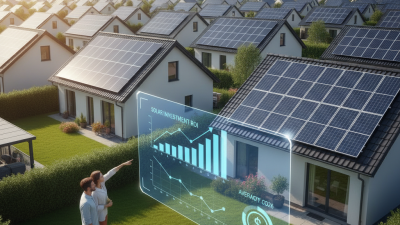
Choosing among the 10 Best Solar Panel Systems for Global Buyers requires more than comparing wattage and price. A reliable Solar Panels System must suit local sunlight, roof structure, grid rules, climate, and household demand. A compact apartment in Lisbon needs a different design from a remote farm in Kenya or a snowy home in Canada.
The details matter. Buyers should examine panel efficiency, inverter quality, battery compatibility, warranty terms, degradation rates, and installer support. A 5-kilowatt system may power an efficient home comfortably, yet struggle with air conditioning, water heating, or electric vehicle charging. Shading from a chimney can also reduce daily production, even when the roof looks spacious.
Fatih Birol, Executive Director of the International Energy Agency, has said, “Solar PV is now cheaper than coal and gas in most countries.” That advantage is important, but affordability alone should not decide the purchase. Product testing, transparent performance data, and qualified installation remain essential. Certifications also vary between markets.
This guide compares leading systems through a practical, global lens. It considers performance, durability, monitoring tools, storage options, maintenance, and value over time. It also recognizes an uncomfortable truth: no universal ranking can be perfect. Prices change. Incentives change. Supply chains change.
Some systems look excellent on paper.
Real-world results may differ.
Readers should confirm local regulations, roof conditions, installer credentials, and after-sales service before committing. The strongest choice is not always the most powerful system. It is the one that keeps producing dependable electricity under the conditions a buyer actually faces.
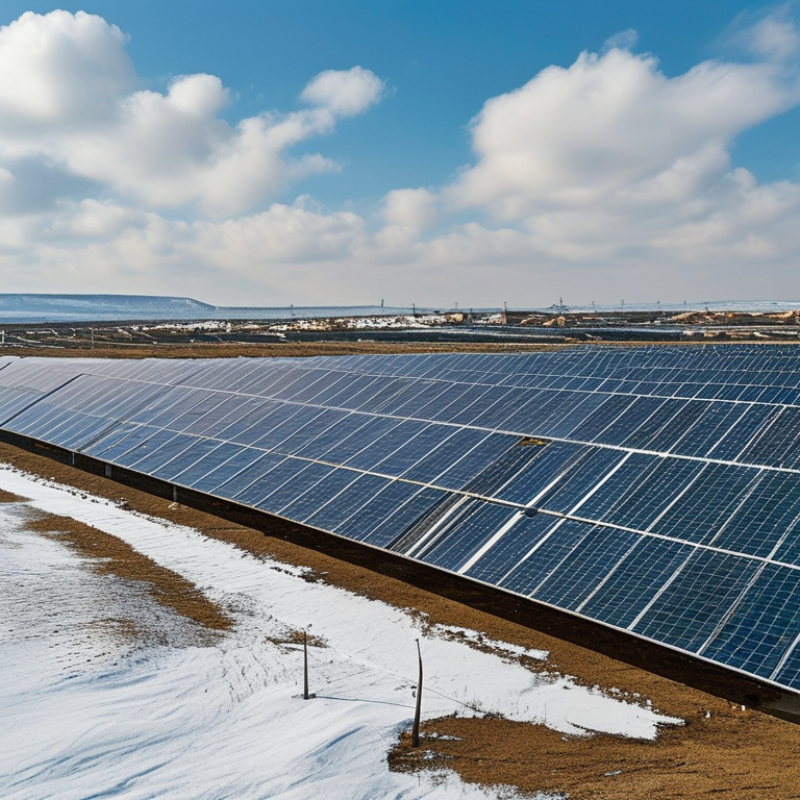
Solar Panel System Types and Their Core Technologies
The right solar system depends on climate, grid access, roof shape, and daily electricity use. Grid-tied systems send excess power to the network, while off-grid systems need batteries and careful load planning. Hybrid systems combine both approaches. The International Renewable Energy Agency reported 1,419 GW of global solar capacity at the end of 2023. That growth reflects falling costs, but not every technology suits every location.
Monocrystalline silicon panels offer high efficiency and compact installation areas. Polycrystalline panels can provide a lower-cost option, though they usually need more space. Thin-film modules perform well on lightweight surfaces and in some hot conditions. Bifacial panels capture reflected light from the rear side, especially above bright ground or reflective roofs. Battery systems commonly use lithium-based storage because of their energy density, but temperature control remains essential. Small details matter. A shaded vent can reduce output across a whole panel string. NREL research also shows that degradation, soiling, and temperature can materially affect lifetime production. I sometimes see buyers focus too heavily on peak wattage. That is an imperfect shortcut.
Tips: Request a site-specific yield estimate, not a brochure figure. Check shading during morning and afternoon hours. Compare usable battery capacity, warranty terms, inverter limits, and local service skills. The best system may produce slightly less on paper, yet perform better through heat, dust, cloudy days, and seasonal demand.
| System Type | Core Technology | Typical Module Efficiency | Typical Power Temperature Coefficient | Expected Service Life | Best-Suited Applications | Main Advantages | Key Limitations | Climate and Site Considerations |
|---|---|---|---|---|---|---|---|---|
| Monocrystalline PERC System | Single-crystal silicon cells with passivated emitter and rear cell architecture. | 19%–22% | Approximately −0.29% to −0.35% per °C | 25–30 years of power generation | Residential rooftops, commercial buildings, and utility-scale projects where space is limited. | High availability, strong energy yield, mature manufacturing, and good performance in a wide range of climates. | Usually less efficient than newer n-type technologies; rear-side degradation and light-induced degradation may be higher. | Suitable for most climates. Adequate ventilation is important in hot regions. |
| N-Type TOPCon System | N-type crystalline silicon cells using a tunnel oxide passivated contact structure. | 21%–23.5% | Approximately −0.28% to −0.32% per °C | 25–30 years of power generation | Space-constrained rooftops, large commercial installations, and high-yield utility projects. | High efficiency, low degradation, reduced light-induced degradation, and strong performance at elevated temperatures. | Typically costs more than basic p-type modules and requires careful design to optimize system voltage and current. | Well suited to hot climates, high-irradiance regions, and projects seeking long-term energy yield. |
| Heterojunction System | Crystalline silicon cells combined with thin amorphous-silicon passivation layers. | 21%–24% | Approximately −0.24% to −0.30% per °C | 25–30 years of power generation | Hot regions, premium rooftops, and installations where lifetime output is a priority. | Very good temperature performance, high efficiency, low degradation, and strong low-light response. | Higher manufacturing complexity and often higher upfront cost; modules can be more sensitive to handling requirements. | Particularly attractive in hot climates and locations with large daily temperature variations. |
| Interdigitated Back Contact System | All electrical contacts are positioned on the rear side of the silicon cell, leaving the front surface unobstructed. | 22%–24.5% | Approximately −0.29% to −0.32% per °C | 25–30 years of power generation | Premium residential rooftops and projects requiring maximum output from a small area. | Very high efficiency, attractive appearance, and excellent use of limited roof area. | Higher price, more demanding production processes, and fewer supply options in some markets. | Useful where roof space is scarce; standard mounting and ventilation practices remain important. |
| Bifacial Glass-Glass System | Two-sided module construction that converts direct sunlight on the front and reflected light on the rear. | 19%–23% | Approximately −0.28% to −0.35% per °C | 30 years or more, depending on construction and environment | Ground-mounted arrays, elevated commercial roofs, carports, and sites with reflective surfaces. | Can produce additional rear-side energy, often has durable glass-glass construction, and may have lower long-term degradation. | Rear-side gain varies greatly and may be small on dark, tightly spaced rooftops; installation can require higher clearance. | Performs best over light-colored ground, concrete, sand, or snow, with sufficient rear-side exposure. |
| Shingled Cell System | Cells are cut into strips and overlapped or connected in shingle-like rows to reduce inactive spaces. | 20%–23% | Approximately −0.29% to −0.35% per °C | 25–30 years of power generation | Residential rooftops, irregular roof areas, and installations where partial-shading behavior is important. | Efficient use of module area, attractive appearance, strong mechanical design options, and improved shade tolerance in some layouts. | Repair procedures can be more specialized, and availability may vary by region. | Useful on roofs with multiple orientations or occasional shading, subject to proper electrical design. |
| Polycrystalline Silicon System | Silicon cells made from multiple crystal fragments cast into ingots. | 16%–19% | Approximately −0.37% to −0.42% per °C | 25–30 years of power generation | Large roofs, ground-mounted projects, and cost-sensitive installations with adequate space. | Established technology, generally lower manufacturing complexity, and broad installer familiarity. | Lower efficiency and typically weaker high-temperature performance than modern monocrystalline options. | Works in many regions but requires more area for the same system capacity, especially in hot climates. |
| Cadmium Telluride Thin-Film System | Thin semiconductor layers deposited onto glass substrates. | 16%–19% | Approximately −0.20% to −0.30% per °C | 25–30 years of power generation | Utility-scale solar farms and large sites with sufficient land area. | Good hot-climate performance, relatively strong low-light response, and lower sensitivity to high operating temperatures. | Lower efficiency than leading crystalline silicon modules and limited suitability for space-constrained rooftops. | Well suited to hot, high-irradiance locations; environmental handling and recycling requirements should be reviewed. |
| CIGS Thin-Film System | Thin-film cells based on copper, indium, gallium, and selenium semiconductor layers. | 12%–18% | Approximately −0.30% to −0.40% per °C | 20–30 years, depending on module construction | Lightweight structures, selected building-integrated applications, and surfaces where flexible form factors are useful. | Can be made lightweight or flexible, performs comparatively well under diffuse light, and offers design flexibility. | Lower efficiency, less standardized supply, and greater area requirements than high-efficiency silicon modules. | Useful where weight, appearance, or curved surfaces matter more than maximum power density. |
| Amorphous Silicon Flexible System | Non-crystalline silicon deposited in very thin layers on flexible or lightweight substrates. | 6%–12% | Approximately −0.20% to −0.35% per °C | 10–20 years, depending on product construction and exposure | Lightweight roofs, portable systems, temporary structures, curved surfaces, and low-load applications. | Low weight, flexible installation options, and good performance under diffuse or weak light. | Lowest power density among the listed options, larger area requirements, and potentially shorter service life. | Best for structures that cannot support conventional glass modules; verify fire, wind, and waterproofing requirements. |
| Performance ranges are typical industry values for commercially available modules and can vary by cell design, module format, climate, installation angle, shading, soiling, and quality control. Actual annual energy yield depends on local solar irradiation, system losses, inverter design, mounting conditions, and maintenance. | ||||||||